


How to Size an Explosion-Proof Air Conditioner: BTU and Cooling Capacity Guide
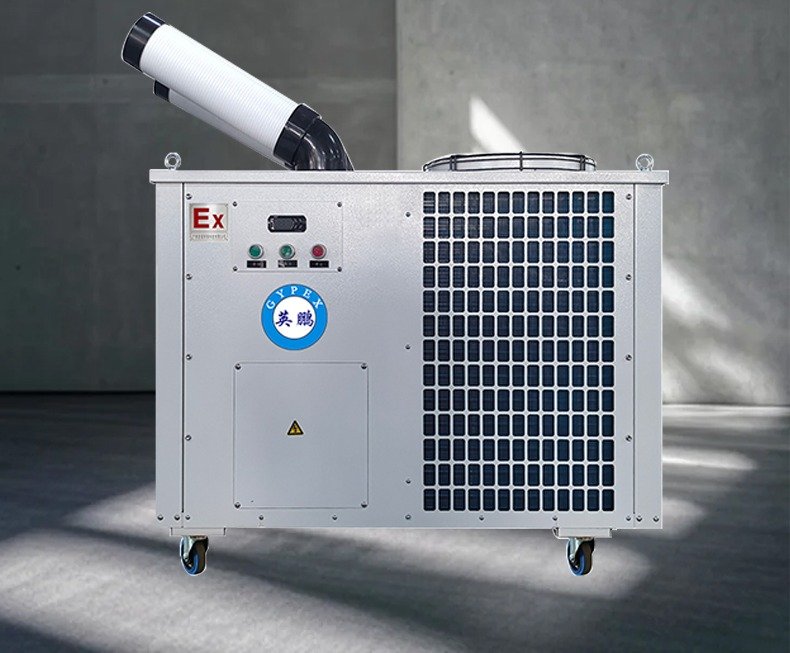
Wrong sizing causes two problems. An undersized unit never reaches the target temperature. An oversized unit short-cycles and wastes energy. In hazardous areas, both problems carry extra risk. This guide explains explosion-proof air conditioner sizing from scratch. We cover BTU calculations, heat load factors, and real-world examples. Follow the steps, and you will order the right capacity the first time. In addition, we share typical capacity ranges for common rooms.
Why Sizing Matters in Hazardous Areas
Explosion-proof units cost more than standard ones. Hence, every kW of overcapacity wastes money. On the other hand, undercapacity threatens process integrity. Electronics overheat. Chemicals degrade. Control rooms become unsafe. Because of this, correct explosion-proof air conditioner sizing protects both budget and operations. In addition, explosion-proof air conditioner sizing directly affects safety margins in the room.
The Basic BTU Formula
Start with the room volume. First, multiply length by width by height to get cubic feet. Then apply a heat factor per cubic foot. For normal rooms, use 1 to 1.5 BTU per cubic foot. However, hazardous sites usually need more. Specifically, process heat, solar load, and ventilation raise the figure. For example, a room of 2,000 cubic feet may need 3,000 to 4,000 BTU before adjustments.
Convert the result to kW for international projects. One kW equals about 3,412 BTU per hour. In addition, check the unit’s rated capacity at your ambient temperature. Consequently, capacity drops as outdoor temperature rises. Therefore, size for the hottest day, not the average day.
Heat Load Factors You Cannot Ignore
Several factors add heat beyond the room volume. First, equipment heat: motors, drives, and batteries release energy. Second, people: each occupant adds roughly 400 BTU per hour. Third, solar gain: windows and roofs add heat in summer. Fourth, ventilation: fresh-air intake brings outdoor heat. Fifth, process requirements: some rooms need tight temperature control.
In addition, consider wall insulation and roof material. Poorly insulated rooms gain heat quickly. For example, metal-clad buildings in summer act like ovens. Therefore, factor the building envelope into the calculation. Also remember altitude and humidity. For instance, higher altitudes reduce air density. Meanwhile, humid air increases latent load. As a result, coastal sites often need larger units.
In addition, consider the temperature class. The cooling capacity must hold the room below the auto-ignition limits of any substances inside. Importantly, this is a safety function, not a comfort function. Therefore, always include a safety margin of 10 to 20 percent.
Step-by-Step Sizing Example
Let us size a control room together. The room is 10 m by 8 m by 3 m. That is 240 cubic meters, or about 8,475 cubic feet. With equipment load, use a factor of 1.8 BTU per cubic foot. As a result, the base load equals about 15,255 BTU. Add 10 percent safety margin. The result is about 16,780 BTU, or roughly 4.9 kW. Therefore, a 5 to 6 kW certified unit fits this room.
Now consider a battery room with heavy equipment. The room measures 15 m by 10 m by 4 m. That equals 600 cubic meters, or about 21,000 cubic feet. In fact, batteries release significant heat during charging. Therefore, use a factor of 2.2 BTU per cubic foot. The base load reaches about 46,200 BTU. Add 15 percent margin. In addition, door openings add short-term heat spikes. The final figure lands near 53,000 BTU, or roughly 15.5 kW. A 16 to 18 kW certified unit provides headroom.
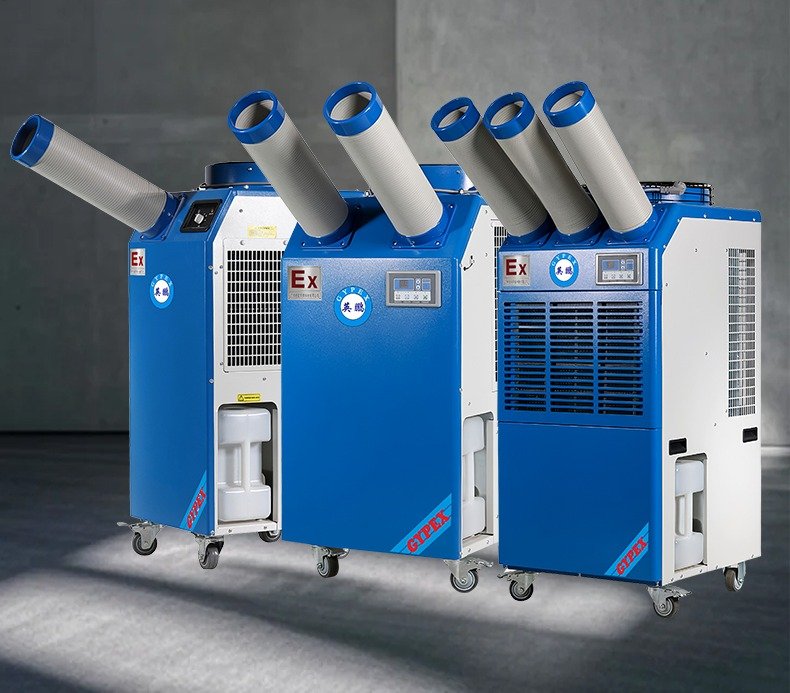
For a larger process building, the math scales up. The BFKG cabinet series covers 2 to 40 HP. For temporary cooling during maintenance, the BFLQ portable series offers flexible spot cooling from 3.5 to 28 kW.
How Many BTUs Do Different Rooms Need?
| Room type | Typical size | Suggested capacity |
|---|---|---|
| Control room | 20–40 m² | 2.5–5 kW (9–17k BTU) |
| Analyzer shelter | 10–20 m² | 1.5–3 kW (5–10k BTU) |
| Battery room | 30–60 m² | 5–10 kW (17–34k BTU) |
| Warehouse bay | 100+ m² | 10–40 kW (34–136k BTU) |
These figures serve as starting points only. Therefore, verify each case with a heat load calculation.
Sizing for Portable and Temporary Cooling
Portable units follow the same math, plus duct losses. Long flexible ducts reduce effective capacity. Therefore, keep ducts short and straight. In addition, place the unit outside the classified zone when possible. For maintenance tents, add extra margin for open openings. The BFLQ portable series covers 3.5 to 28 kW. Consequently, one unit can serve several spots in rotation.
Sizing for Cold Storage and Sample Rooms
Cold storage needs differ from comfort cooling. Therefore, match the set-point and the heat load carefully. For example, sample rooms may require 2°C to 8°C storage. Meanwhile, reagent rooms may need tighter humidity control. Consequently, capacity alone does not decide the unit. In addition, insulation quality changes the calculation. Hence, review the envelope with your engineer. Finally, confirm the unit’s low-ambient operation range. As a result, the room stays stable all year.
Common Sizing Mistakes
- Using standard-room factors in hazardous areas.
- Ignoring equipment heat from drives and batteries.
- Sizing for average temperature instead of peak summer.
- Forgetting the safety margin for process changes.
- Mixing BTU and kW without conversion.
Efficiency and Refrigerant Notes
Higher capacity does not mean better. Consequently, efficiency matters for operating cost. Compare EER or SEER ratings between candidates. In addition, check refrigerant rules in your region. The EPA SNAP program lists acceptable refrigerants in the US. In addition, similar rules exist elsewhere. Therefore, choose a unit that will stay compliant for years. Furthermore, ask for energy data at part load.
Also verify the ambient rating. Units for desert sites need 50°C or higher ratings. The IEC 60079 series also sets ambient limits for certified equipment. Match the rating to your real climate.
When to Ask a Professional
Complex sites deserve expert help. Process heat, solar gain, and ventilation interact in surprising ways. In addition, zone rules limit where you can place units. Therefore, send your room drawings to the manufacturer. Specifically, our engineers review the layout and confirm the sizing. For example, they check duct routes and mounting points. This step costs nothing and prevents costly mistakes. Therefore, involve them before the tender.
Buyer Checklist
- Measure the room accurately, including ceiling height.
- List all heat sources inside the space.
- Apply a suitable BTU factor and a 10–20% margin.
- Convert units carefully between BTU and kW.
- Check capacity at peak ambient temperature.
- Confirm the zone certificate for the chosen capacity.
FAQ
What size explosion-proof air conditioner do I need for a small control room?
A 20 to 30 square meter room usually needs 1.5 to 3 HP. Confirm with a heat load calculation first.
Should I oversize to be safe?
Oversizing causes short cycling and humidity problems. Add a 10 to 20 percent margin instead.
Can one unit cool multiple rooms?
Yes, with ducting and correct static pressure. Ask for a layout review from the manufacturer.
Why does my supplier ask about ambient temperature?
Capacity falls as ambient temperature rises. Therefore, the rating must match your hottest day. Otherwise, the room stays warm in summer.
What does “kW” mean in sizing?
kW measures cooling output in kilowatts. One kW equals about 3,412 BTU per hour. Most international datasheets use kW.
Unsure about your heat load? Email sales@blockchain-miner.com with the room dimensions and equipment list. Our engineers will calculate the right explosion-proof air conditioner sizing for your site and send a quotation. In short, size correctly once, and cool safely for years.