
ATEX vs IECEx Certification: What It Means for Explosion-Proof HVAC
Two certification systems dominate the hazardous-area market. One is European. The other is global. Both prove that equipment is safe for explosive atmospheres. However, they differ in legal basis, scope, and acceptance. This article explains the ATEX vs IECEx question in plain terms. We focus on what HVAC buyers must know. We also cover how each system affects procurement and site audits. In addition, we look at how testing works and how to verify documents.
What Is ATEX Certification?
ATEX comes from the French phrase “Atmosphères Explosibles.” It refers to two European directives. The main one is the ATEX Directive 2014/34/EU. This directive governs equipment placed on the EU market. Therefore, any explosion-proof HVAC sold in Europe must carry ATEX certification. In short, ATEX is a legal requirement, not an option.
What Is IECEx Certification?
IECEx is an international certification scheme. It builds on the IEC 60079 series of standards. Unlike ATEX, IECEx is voluntary in most countries. However, many nations accept it for import approval. Australia, the Middle East, and parts of Asia recognize IECEx certificates widely. Therefore, IECEx simplifies exports beyond Europe.
ATEX vs IECEx: The Key Differences
The ATEX vs IECEx comparison starts with legal force. Specifically, ATEX is mandatory inside the EU. IECEx is a market-access tool elsewhere. In addition, ATEX certificates come from EU Notified Bodies. IECEx uses ExCBs (Certification Bodies) and testing labs worldwide. Consequently, an IECEx certificate often costs less and moves faster.
Another difference concerns scope. ATEX covers equipment plus protective systems. IECEx covers equipment, services, and personnel competency. For HVAC buyers, however, the practical result is similar. Both systems test the same core standards. Therefore, a well-built unit can hold both certificates at once.
| Aspect | ATEX | IECEx |
|---|---|---|
| Legal basis | EU Directive 2014/34/EU | IEC 60079 standards |
| Scope | EU market | International |
| Status | Mandatory in EU | Voluntary, widely accepted |
| Issuing body | Notified Body | ExCB / testing lab |
| Typical use | Europe sales | Export projects |
Why Certification Matters More Than Ever
Safety regulators now audit certificates more strictly. Insurance firms also demand proof of compliance. In addition, import authorities check markings at the border. Therefore, a missing certificate can block a shipment. This trend makes the ATEX vs IECEx choice a business decision, not a formality. Furthermore, operators face legal liability after any incident. Consequently, procurement teams now treat certificates as core documents. Therefore, buyers should check certificates before signing contracts.
How ATEX and IECEx Testing Works
Testing follows a defined path in both systems. First, the manufacturer submits the design documents. Second, the body reviews the drawings and calculations. Third, a laboratory runs type tests on samples. These tests cover enclosure strength, surface temperature, and circuit energy. Finally, the body issues the certificate. In addition, the manufacturer must maintain a quality system. Because of this, periodic audits continue after the certificate issues.
In addition, sample audits continue during production. The body visits the factory at intervals. As a result, the certificate reflects real manufacturing, not just a prototype. Therefore, ask for the latest audit report with each quotation.
What This Means for Explosion-Proof HVAC Buyers
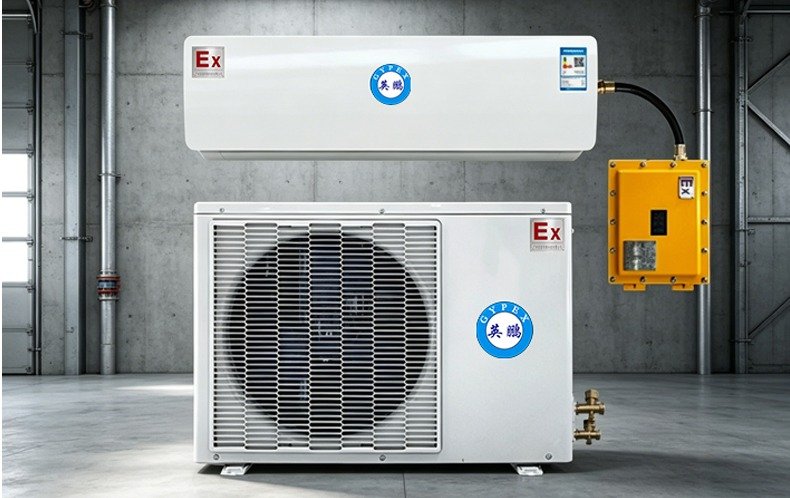
For HVAC, the ATEX vs IECEx debate ends in one practical rule: match the certificate to the destination. Buying for a European plant? Require ATEX. Buying for a global project? Ask for both ATEX and IECEx. In addition, check the marking details. The certificate must list the zone, gas group, and temperature class for your site.
Notably, some buyers confuse certificate presence with zone coverage. For example, a certificate for Zone 2 does not cover Zone 1. For instance, our BFKG cabinet series offers certified variants for different zones. Therefore, always match the unit marking to your area classification.
Consider a typical nameplate. It may read “Ex db IIB T4 Gb” under IECEx. Each symbol carries meaning. “Ex d” means flameproof enclosure. “IIB” defines the gas group. “T4” sets the surface temperature limit. “Gb” indicates Zone 1 suitability. Therefore, learn to read these marks. Consequently, this skill prevents many procurement mistakes.

Regional Requirements at a Glance
- European Union: ATEX is mandatory for all equipment in explosive atmospheres.
- Global projects: IECEx acceptance speeds up import approvals.
- North America: NEC Class I Division or Zone rules apply, with UL marks.
- China: CCC (Ex) certification applies to domestic installations.
ATEX and IECEx in Tender Documents
Most oil and gas tenders now demand both certificates. Therefore, suppliers must hold both documents ready. In addition, tender teams compare certificate scopes, not just brand names. Consequently, a unit with wider zone coverage wins more bids. Furthermore, project timelines depend on document review. Hence, ask for certificates early in the tender process. For example, request them with the first quotation. In contrast, waiting until delivery creates delays. As a result, smart buyers add certificates to the evaluation matrix. Finally, keep translations ready for local authorities.
Common Certification Pitfalls
Pitfalls appear when buyers skip verification. For instance, some accept photocopies without numbers. Others ignore the gas group on the certificate. Meanwhile, a few forget that site-specific approvals may apply. Therefore, build verification into your purchase process. In addition, record every certificate in your asset register. Consequently, audits become faster and safer. In short, verification protects your project and your reputation.
How to Verify a Certificate
In fact, verification is easier than most buyers think. First, check the certificate number on the nameplate. Second, confirm the issuing body. Third, search the body’s public database. In addition, compare the certificate scope with your zone. Finally, ask the supplier for the full certificate PDF, not just a summary.
Beware of self-declared “compliant” claims. A real certificate shows a test report behind it. Because of this, always demand documents before payment. Our industry trends report notes that counterfeit certificates remain a market problem.
Choosing a Supplier with Real Certificates
Some suppliers publish attractive brochures without proof. Therefore, request the certificate number and issuing body. Then verify the number online. In addition, ask for the test report summary. In fact, a serious supplier shares documents quickly. Because of this, document speed signals reliability. Finally, confirm that spare parts and service match the certified design. In addition, confirm the factory location and audit history. As a result, you know exactly who stands behind the certificate.
Buyer Checklist
- Determine the destination market before choosing a scheme.
- Request both ATEX and IECEx for flexible resale.
- Verify zone, gas group, and T-class on the certificate.
- Check the issuing body in official databases.
- Keep certificate copies for audits and insurance.
FAQ
Is IECEx accepted in Europe?
Not automatically. Specifically, Europe requires ATEX for the EU market. Some manufacturers hold both certificates for this reason.
Which is better: ATEX or IECEx?
Neither is universally better. ATEX matters for Europe. IECEx helps global exports. In fact, most serious suppliers offer both.
Does certification guarantee explosion safety?
It proves the design meets standards. However, installation and maintenance must also follow the rules. A certified unit installed badly is still dangerous.
How long does certification take?
Typically, type testing takes weeks, not months. However, complex designs may need more time. Plan certification early in the project.
Do certificates expire?
They remain valid while the design and standards stay unchanged. However, manufacturers must renew quality-system audits. Therefore, ask for the latest revision.
Can one certificate cover several unit models?
Yes, if the models share the same design and enclosure. However, the certificate lists every covered model. Therefore, check your model number on the document.
Need certified explosion-proof HVAC for your project? Email sales@blockchain-miner.com with your zone and destination country. We will send the matching certificates and a quotation. In conclusion, ATEX vs IECEx is a paperwork question; safety is the real product.