


Spot Cooler vs Explosion-Proof Air Conditioner: Which One Do You Need?
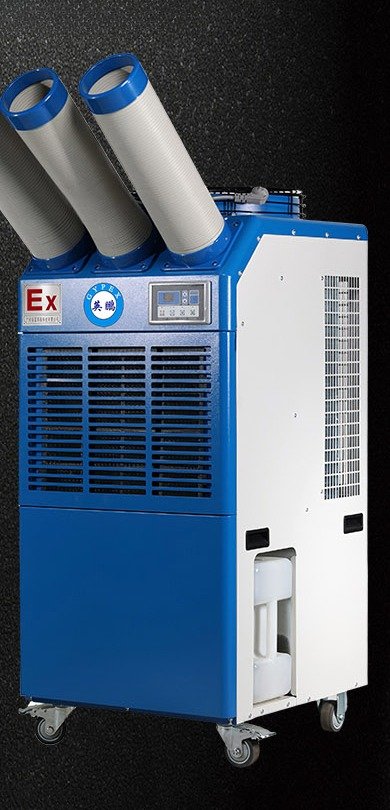
Facility managers often ask one question: do we need an explosion-proof spot cooler or a full air conditioner? Both cool industrial spaces. However, they solve different problems. This guide compares explosion-proof spot cooler options with fixed systems. Then it shows which choice fits typical scenarios. Consequently, you can decide with confidence and avoid paying for the wrong solution.
What Is a Spot Cooler?
A spot cooler cools a specific area, not a whole room. You place it near a person, machine or enclosure. Then it delivers a focused stream of cold air. Many units are portable. In addition, they often need a flexible duct for the warm exhaust air. Moreover, spot coolers come in many sizes. Some cover a single workbench. Others cool an entire maintenance tent.
In hazardous areas, the spot cooler must be certified. A certified explosion-proof spot cooler carries the same protection logic as a full air conditioner. Its electrical parts sit inside explosion-proof housings. The IEC 60079 standards define these requirements. In addition, European buyers should verify ATEX certification under Directive 2014/34/EU. Therefore, never assume that a standard portable unit is acceptable.
What a Full Explosion-Proof Air Conditioner Offers
A full air conditioner conditions an entire room. It controls temperature and often humidity. Typically, it is fixed to a wall, floor or roof. Consequently, it provides steady, year-round comfort. For control rooms and electrical rooms, this consistency matters. Moreover, full units maintain temperature even when nobody enters the room. In addition, they support heating options for winter operation. Moreover, they run quietly behind the scenes.
Our wall-mounted explosion-proof air conditioner suits smaller rooms. The cabinet series covers larger process buildings. In addition, the portable explosion-proof air conditioner range bridges both worlds. Consequently, the choice often depends on the room, not the technology.
Spot Cooler vs Air Conditioner: Key Differences
Both products keep people and equipment cool. However, they differ in coverage, setup and economics. The table below summarizes the main points.
| Factor | Explosion-Proof Spot Cooler | Explosion-Proof Air Conditioner |
|---|---|---|
| Coverage | Local area, workstation or tent | Whole room |
| Installation | Portable or semi-portable | Fixed mounting |
| Setup speed | Fast, often same day | Days, with certified installers |
| Capacity range | Typically 3.5 to 28 kW | Up to 40 HP or more |
| Upfront cost | Lower | Higher |
| Best for | Turnarounds, hot spots, temporary jobs | Permanent rooms and shelters |
In practice, the decision follows the application. A permanent control room deserves a fixed unit. A two-week turnaround job suits a portable cooler. Therefore, match the equipment to the duration and scope of the work.
When a Spot Cooler Makes Sense
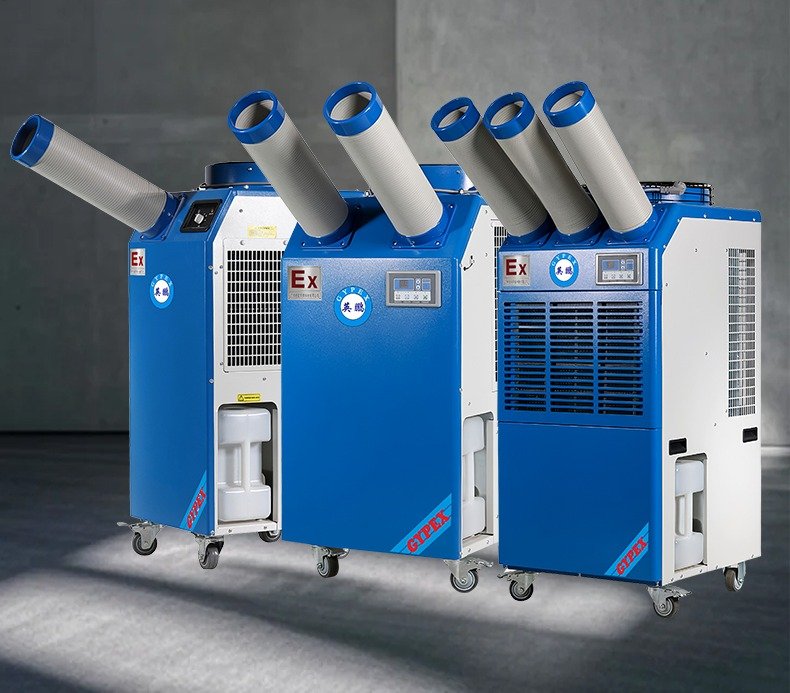
Spot cooling shines during shutdowns and maintenance. Workers gather in one area for a few days. A portable unit cools that zone quickly. In addition, spot coolers help with temporary heat spikes. For example, a failed chiller or a hot weekend can push a room beyond limits. A certified unit provides immediate relief. Moreover, multiple outlet configurations direct cold air precisely. Consequently, one unit can serve several workstations.
Logistics matter too. Portable units move on wheels or pallets. Therefore, you can reposition them as the job changes. In addition, rental and relocation are straightforward. For site teams, an explosion-proof spot cooler offers flexibility that fixed units cannot match. In fact, many operators keep one unit on standby for emergencies.
Certification: The Non-Negotiable Layer
Certification separates safe units from dangerous ones. A standard spot cooler has open electrical parts. Therefore, it cannot enter classified areas. In contrast, an explosion-proof spot cooler carries tested protection. The unit should show the zone, gas group and temperature class on its plate. Moreover, ask for the certificate number. Then verify it with the issuing body. Consequently, you eliminate counterfeit risk.
Some regions demand local approvals. European sites need ATEX documentation. In addition, Middle East projects often request IECEx. Furthermore, North American plants want UL/cUL listing. Therefore, confirm the certificate set before ordering. In short, certification drives the delivery time as much as the price.
When You Need a Full Explosion-Proof Air Conditioner
Choose a fixed unit for permanent rooms. Control rooms, analyzer shelters and electrical rooms run 24/7. Therefore, they need reliable, steady cooling. In addition, fixed units support humidity control and heating options. Moreover, they protect sensitive electronics better than temporary setups. Consequently, most facility owners install a full system for these spaces.
Consider the total cost of ownership. A spot cooler may appear cheaper at first. However, energy cost and service life can change the picture. For example, a permanent room cooled by portable units often costs more over five years. In contrast, a properly sized fixed unit pays back through efficiency. Therefore, match the solution to the application, not the price tag. In addition, check the installation lead time. Fixed units need certified mounting and wiring.
Planning: Rental, Lead Time and Total Cost
Timing influences the choice. A permanent room may wait for a fixed unit. However, a shutdown cannot wait. Therefore, keep a certified portable unit on standby. In addition, ask about lead times early. Fixed units often take longer to deliver than portables. Consequently, plan the schedule around the lead time. Moreover, check the rental fleet availability. During summer, portables book out fast. Therefore, reserve early for planned work. In addition, confirm the rental contract includes certified parts. Consequently, the unit arrives ready for use. In short, plan the logistics as carefully as the equipment choice.
Compare the five-year cost, not the invoice. Include energy, maintenance and installation. For example, a portable unit used daily costs more in electricity. In contrast, a fixed unit amortizes its price over years. Moreover, factor in labor. Certified installation adds cost for fixed units. Therefore, run the numbers for your specific duty cycle. In short, ask whether the explosion-proof spot cooler includes duct kits and stands.
Common Mistakes When Choosing
The first mistake is skipping the classification check. Some buyers order a certified unit for the wrong zone. Therefore, confirm the zone and gas group first. The second mistake is ignoring the exhaust duct. A spot cooler needs a clear path for warm air. Consequently, plan the duct route before the unit arrives. The third mistake is undersizing the capacity. Therefore, calculate the heat load at the workstation, not the whole room.
The fourth mistake is forgetting service access. A unit squeezed behind equipment is hard to maintain. Consequently, filters stay dirty and capacity drops. In addition, some buyers forget spare parts. Therefore, order filters and belts with the unit. In short, plan the whole lifecycle, not just the purchase. Notably, these mistakes apply to every explosion-proof spot cooler project.
Buyer Checklist
- Define the target area: local spot or whole room.
- Confirm the zone, gas group and temperature class.
- Ask for IECEx or ATEX certificates.
- Check capacity, airflow and duct options.
- Compare total cost over five years.
- Verify voltage, frequency and ambient rating.
- Plan service access and spare parts.
- Ask about rental and standby units.
FAQ
Can I use a spot cooler permanently?
You can, but it is rarely optimal. Portable units cost more to run continuously. Therefore, use them for temporary or backup duty.
Does an explosion-proof spot cooler need installation?
Certified electrical connection is still required. In addition, the warm-air duct must vent safely. Consequently, plan the exhaust path before use.
Which option is cheaper?
Upfront, a spot cooler costs less. However, a fixed air conditioner often wins over the long term. In short, compare lifetime costs, not purchase prices.
Not sure which cooling solution fits your site? Ask LONTU for a recommendation. Share your room size, zone classification and duty cycle. Email sales@blockchain-miner.com and we will compare spot cooler versus full AC options for you. We usually reply within one business day.