


What Is an Explosion-Proof Air Conditioner? A Complete Beginner’s Guide
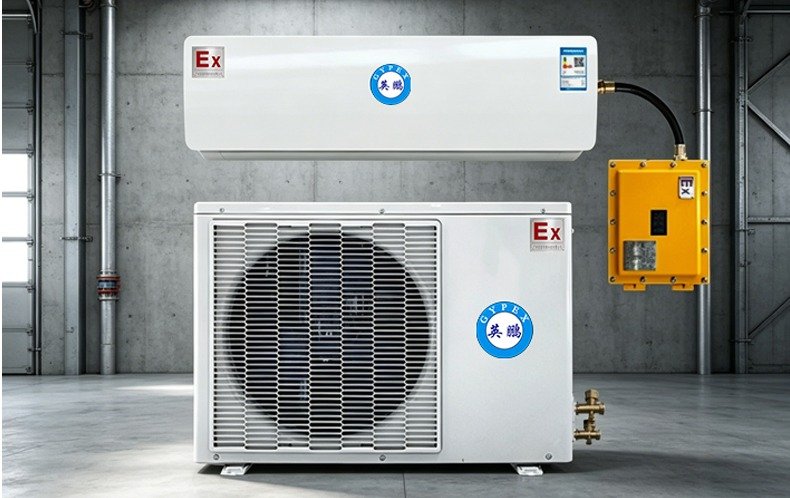
Picture a room full of flammable gas. Now imagine a standard air conditioner switching on inside it. The relay clicks. A spark jumps. The result can be catastrophic. So what is an explosion-proof air conditioner exactly? In simple terms, it is a cooling unit built to operate safely inside hazardous areas. Those areas may contain explosive gas, vapor, or dust. This guide answers the question for beginners. We cover the working principle, the certification, and the buying process step by step. In addition, we share the mistakes that first-time buyers often make.
What Is an Explosion-Proof Air Conditioner?
An explosion-proof air conditioner is a cooling system engineered for classified locations. Unlike a standard AC, it cannot ignite the surrounding atmosphere during normal operation. Specifically, manufacturers achieve this through flameproof enclosures, sealed circuits, and spark-free components. The unit still cools, heats, and dehumidifies like any air conditioner. However, it does so without creating an ignition source.
In practice, the unit looks similar to a standard AC from the outside. Inside, however, the story differs completely. For example, heavy enclosures, certified joints, and sealed motors replace flimsy plastic covers. For this reason, explosion-proof units weigh more and cost more. Nevertheless, they remain the only legal option for classified spaces.
Importantly, “explosion-proof” does not mean the unit survives an external explosion. Instead, it means the unit cannot trigger one. In fact, the term describes a design philosophy, not a strength rating. Because of this, every component inside the enclosure must meet strict standards. The result is a unit that protects people and assets around the clock.
For most buyers, therefore, the question of what is an explosion-proof air conditioner has a practical answer. As a result, it is the only air conditioner you may legally install in a hazardous area. Any other choice puts lives and production at risk.
How Does an Explosion-Proof Air Conditioner Work?
An explosion-proof air conditioner uses several protective methods at once. First, it places all electrical parts inside a flameproof enclosure. This enclosure (Ex d) contains any internal explosion. As a result, flames cannot escape through the sealed joints. Second, it limits electrical energy in the control circuits. This approach, called intrinsic safety (Ex i), keeps spark energy below the ignition point.
The design follows two complementary ideas. Flameproof containment accepts that an explosion may happen inside. Intrinsic safety prevents ignition energy from existing at all. Both ideas work together in a certified unit. In addition, the refrigerant circuit stays fully sealed. This step removes a second ignition pathway.
Third, the compressor and fan motors sit in hermetically sealed housings. Refrigerant stays inside a closed loop. Consequently, no flammable medium can mix with the cooling circuit. Fourth, the unit uses thermal protection and proper grounding. Consequently, these features shut down the system before temperatures rise dangerously.
As a result, the unit removes three ignition sources: sparks, hot surfaces, and arcs. Since hazardous areas differ, each design matches a specific zone and gas group. We explain those zones in the next section.
Where Do You Need an Explosion-Proof Air Conditioner?
Hazardous areas exist in many industries. Oil and gas platforms, chemical plants, paint booths, battery rooms, and pharmaceutical facilities all qualify. So do grain silos, spray booths, and fuel storage depots. In these locations, flammable substances appear during normal operation or after an accident.
Typical rooms include control rooms, analyzer shelters, electrical rooms, and battery charging areas. Warehouses that store solvents also qualify. Even small enclosures, such as VFD cabinets, may need certified cooling. In every case, the zone determines the requirement. For example, a room near a relief valve often sits in Zone 1. A storage yard may fall into Zone 2.
Engineers classify such areas into zones. Under the IEC 60079 series, Zone 0/1/2 covers gas and vapor, while Zone 20/21/22 covers dust. North America uses the NEC Class I Division 1/2 system instead. Therefore, your air conditioner must match your area classification. For example, a Zone 2 unit does not automatically qualify for Zone 1.
Before you buy, always confirm the zone, gas group, and temperature class. Our 2026 explosion-proof air conditioner guide explains this process in detail. In addition, our industry trends report covers what is changing in the market.
The Main Types of Explosion-Proof Air Conditioners
Buyers can choose from three main formats. First, wall-mounted split units suit control rooms and small shelters. The BFKT wall-mounted series covers 1 to 3 HP. Second, cabinet units handle larger spaces and process buildings. The BFKG cabinet series runs from 2 to 40 HP. Third, portable units cool temporary or mobile areas. The BFLQ portable series fits maintenance tents and spot cooling jobs.
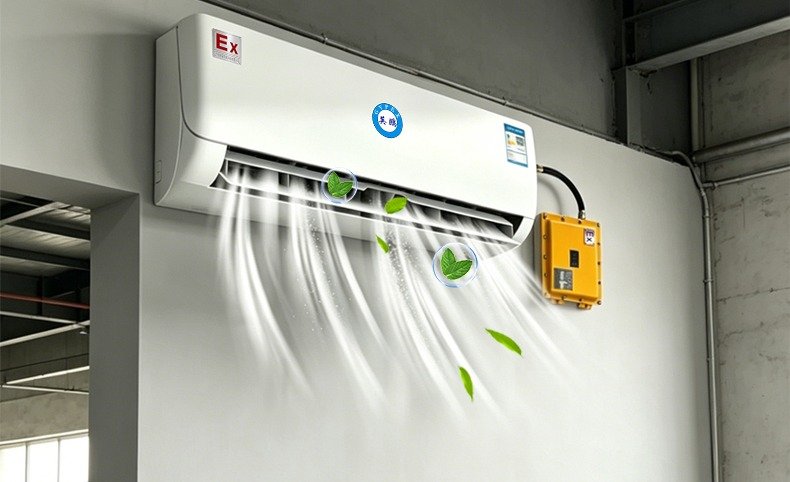
Nevertheless, each format shares the same safety core. However, they differ in capacity, footprint, and installation method. Notably, cabinet units can serve multiple rooms with ducting. Portable units, on the other hand, move quickly between work zones. Choose based on your heat load and layout, not on brand preference alone. In addition, consider future expansion. Extra capacity today avoids a replacement purchase later.
Common Misconceptions About Explosion-Proof Cooling
- “A thicker casing makes any AC safe.” In fact, only certified internal design prevents ignition.
- “Zone 2 units work everywhere.” No. Zone 2 covers low-probability gas only. Zone 1 needs a different certificate.
- “Explosion-proof means explosion-resistant.” Not exactly. The unit prevents ignition rather than surviving blasts.
These myths cost buyers time and money. In contrast, a quick certificate check solves the problem. Therefore, verify every claim against the nameplate and the certificate.
Certification You Must Check Before Buying
Certification proves that a unit really is explosion-proof. In Europe, the ATEX Directive 2014/34/EU governs equipment for explosive atmospheres. The IECEx scheme provides international acceptance. In North America, look for UL or cUL listing. For projects inside China, request CCC (Ex) approval.
Always verify the marking on the nameplate. It should state the zone, gas group (IIA, IIB, or IIC), and temperature class (T1 to T6). In addition, check the IP rating for dust and water protection. A certificate from one region does not automatically cover another. Furthermore, keep the documents in a safe place. Consequently, auditors will ask for them.
Key Features to Look For in a Certified Unit
- Zone and gas group marking on the nameplate.
- Temperature class (T1–T6) matched to your process.
- IP65 or better for outdoor or wash-down sites.
- Corrosion-resistant finish for chemical environments.
- Cooling and heating options for year-round operation.
- Spare parts availability in your region.
Buyer Checklist
- Confirm the area classification before comparing models.
- Match the gas group and T-class to your site conditions.
- Request ATEX and IECEx certificates as a baseline.
- Check the ambient temperature range; hot sites need 50°C+ ratings.
- Verify voltage and frequency for your export destination.
- Choose corrosion protection for chemical or coastal sites.
- Ask about spare parts and service before signing.
FAQ
Is an explosion-proof air conditioner the same as a normal AC with a steel cover?
No. In short, a steel cover alone cannot stop ignition. The internal design, enclosure joints, and certified circuits matter far more.
Can I use one unit in both Zone 1 and Zone 2?
Only if the certificate covers both zones. Many Zone 1 designs also suit Zone 2. However, always check the marking, not the brochure.
What information should I send for a quotation?
Send your zone, gas group, T-class, room size, heat load, and voltage. Tell us whether you need cooling only or cooling and heating. Drawings help us confirm ducting and mounting.
How long does delivery take for a certified unit?
Typical lead times run from four to eight weeks. Custom voltage and heating variants may take longer. Therefore, order early for planned shutdowns.
Can an explosion-proof air conditioner run continuously?
Yes. Industrial units handle 24/7 duty. However, schedule filter cleaning and seal checks regularly.
Planning a hazardous-area cooling project? Email sales@blockchain-miner.com with your area classification and heat load. Our engineers will recommend the right configuration with certificates and a quotation. In conclusion, a certified explosion-proof air conditioner protects both your people and your production.