


How Much Does an Explosion-Proof Air Conditioner Cost in 2026?
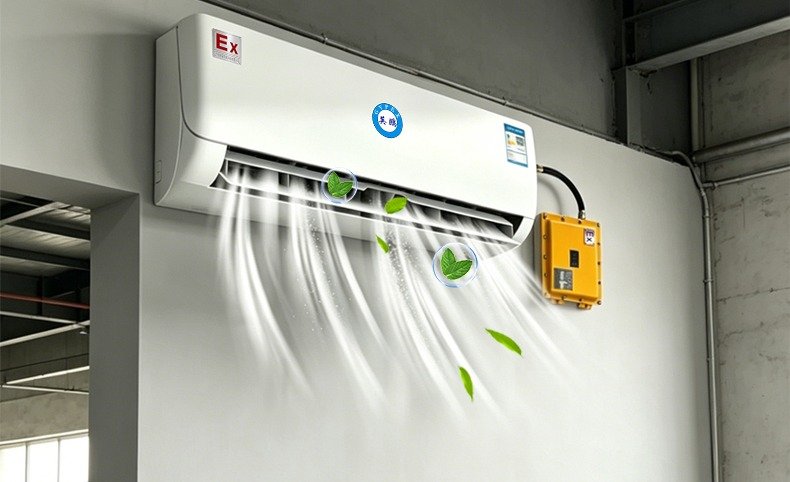
Budgeting for hazardous-area cooling surprises many buyers. The explosion-proof air conditioner cost is higher than a standard unit. However, the price gap has narrowed over the years. This article breaks down 2026 pricing, cost drivers and total ownership costs.
We share realistic ranges and explain why certificates, materials and capacity drive the number. In addition, we show how to avoid hidden costs. For certification background, see our explosion-proof air conditioner guide.
What Drives the Cost of an Explosion-Proof Air Conditioner
Several factors push the price above standard HVAC. First, certification adds significant expense. Every unit must meet the ATEX Directive 2014/34/EU or the IEC 60079 series. Testing and documentation cost real money. Second, flameproof enclosures use heavy castings and precision-machined flamepaths. These parts are expensive to build.
Third, materials matter. Stainless steel and coated enclosures resist corrosion. Therefore, they cost more. Fourth, capacity drives price. A 2 HP unit costs far less than a 40 HP cabinet unit. Fifth, ambient rating adds cost. Units rated for 55 °C use larger condensers and stronger compressors.
Finally, voltage and frequency options affect price. Dual-rated units cost more than single-rating models. Overall, the explosion-proof air conditioner cost reflects real engineering, not market markup.
2026 Price Ranges by Type
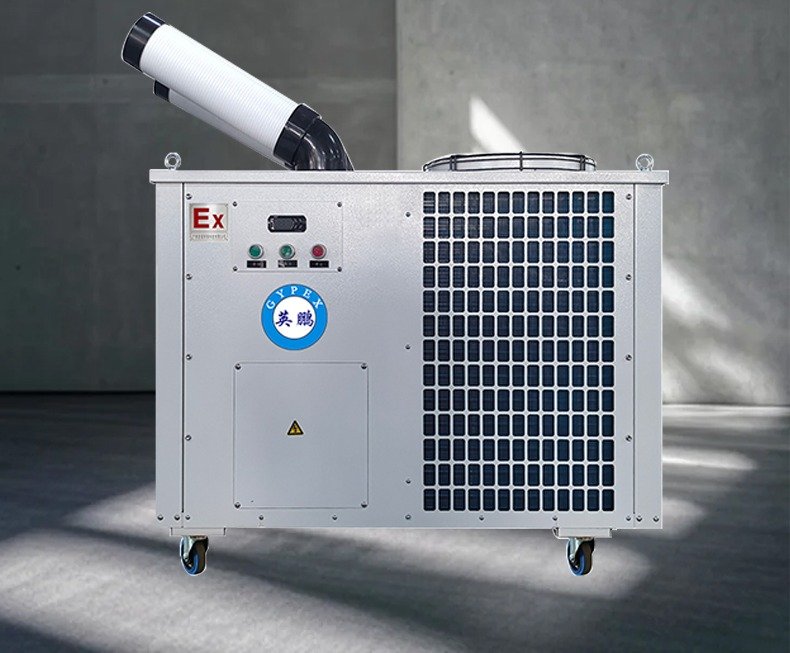
Prices vary by region, certificate and specification. The ranges below reflect typical 2026 ex-works figures for certified units.
| Type | Typical capacity | Indicative price (USD) |
|---|---|---|
| Wall-mounted unit | 1–3 HP | $3,500 – $9,000 |
| Cabinet unit | 2–10 HP | $8,000 – $25,000 |
| Cabinet unit (large) | 12–40 HP | $25,000 – $80,000+ |
| Portable unit | 3.5–14 kW | $6,000 – $18,000 |
As a result, entry-level cooling starts around $3,500. Meanwhile, large process buildings can exceed $80,000 per unit. Consequently, the total project cost depends heavily on the equipment mix.
Regional Price Differences
Prices vary by market. Chinese-made units offer competitive pricing. European and North American units cost more due to local certification. Therefore, compare landed cost, not just the unit price.
Shipping and import duties add up. In addition, customs clearance takes time. For these reasons, request delivered-duty-paid quotes. In contrast, an ex-works price can mislead your budget.
Currency swings also matter. A weak local currency raises import cost. Therefore, lock exchange rates early. As a result, the explosion-proof air conditioner cost stays predictable for your project.
Total Cost of Ownership
The purchase price is only part of the story. Energy use continues for the unit’s life. Therefore, efficiency ratings matter. In addition, maintenance costs accumulate. Filter changes, annual inspections and refrigerant top-ups all add up.
Refrigerant policy adds another factor. The EPA SNAP program restricts certain high-GWP refrigerants. Consequently, new units use lower-GWP refrigerants. These can cost more to source. However, they reduce compliance risk and future retrofits.
Downtime is the hidden cost. A failed cooling unit can stop a process line. For these reasons, reliability often outweighs the initial price. In short, calculate five-year ownership costs, not just the sticker price.
Hidden Costs to Watch For
Installation labor varies by site. Electrical work for certified power is often expensive. In addition, ducting and mounting frames add cost. Therefore, request a full scope of supply with your quotation.
Commissioning and training may carry fees. Ask suppliers to itemize them. As a result, your budget stays accurate. In addition, plan for spare filters and gaskets. These small items add up over a project’s life.
Financing and Procurement Options
Some suppliers offer project financing. Others support lease-to-own arrangements. In addition, framework contracts lock prices for multi-year programs. Consequently, procurement teams can plan with confidence.
Bulk procurement with sister plants reduces cost. In contrast, single-unit purchases pay the highest price. Overall, plan procurement across projects. For these reasons, early engagement with the manufacturer pays off.
How to Reduce Cost Without Cutting Corners
- Right-size the unit: an oversized unit wastes energy and money. Size the cooling load accurately.
- Standardize voltage: choose one voltage and frequency for the whole site.
- Group purchases: buy multiple units in one order. Volume pricing lowers the per-unit cost.
- Compare certificates: some markets accept ATEX or IECEx only. Know your target market first.
- Plan maintenance: a service contract extends life and prevents expensive failures.
- Check lead times: early orders avoid expedite fees and project delays.
In addition, ask suppliers for a full quotation breakdown. Compare enclosure material, compressor brand and included accessories. In contrast, the lowest quote may lack critical options. Therefore, compare like for like.
Budgeting Checklist for 2026 Projects
- Confirm the zone and gas group before requesting quotes.
- Request ATEX and IECEx certificates with every quotation.
- Include installation, ducting and electrical work in the budget.
- Add 10% contingency for site-specific modifications.
- Plan for spare filters and gaskets in the first order.
Comparing Supplier Quotes
Quotes vary widely. Therefore, compare them line by line. Check the enclosure material, compressor brand and included options. In addition, verify the certificate scope. Some certificates cover only specific models. As a result, the lowest price may hide critical gaps.
Ask about lead times. A long lead time can delay your project. In contrast, a slightly higher price may arrive faster. Therefore, evaluate the total value. Overall, the best quote is not always the cheapest one.
Case Study: A Medium Chemical Plant
Consider a chemical plant with ten control rooms. Each room needs 3 HP of cooling. The explosion-proof air conditioner cost for ten wall-mounted units lands around $45,000–$60,000. Installation adds 15–20%.
With a five-year service contract, ownership costs rise by roughly $8,000. However, the plant avoids unplanned downtime. In contrast, a single process stop can cost more than the entire system. Therefore, the investment pays off quickly.
Bulk pricing and standardized voltage reduced this plant’s unit cost by 12%. Consequently, the total project stayed on budget. For these reasons, early planning with the manufacturer matters. In addition, the explosion-proof air conditioner cost stayed predictable throughout the project.
Finally, negotiate accessories. Filters, covers and spare parts often have margin. Bundle them into the contract. As a result, you control the full explosion-proof air conditioner cost.
Warranty and After-Sales Support
Warranty terms vary by supplier. Therefore, read the fine print. Check coverage for compressor, controls and enclosure. In addition, confirm the response time for spares.
After-sales support matters in remote sites. Ask about service partners in your region. Consequently, repairs happen fast. In contrast, a distant supplier means longer downtime.
Include training in the contract. Operators need to run monthly checks. In addition, technicians need the service manual. Overall, support quality affects the real explosion-proof air conditioner cost.
FAQ
Why are explosion-proof air conditioners so expensive?
Certification, flameproof enclosures and corrosion-resistant materials drive the cost. Each unit must prove it cannot ignite the atmosphere.
Do quoted prices include installation?
Usually not. Installation, ducting and certified power supply are separate line items. Confirm this with your supplier.
Can I get a discount for bulk orders?
Yes. Volume orders lower the unit price. Contact the manufacturer directly for project pricing.
Are portable units cheaper than fixed units?
Per unit, often yes. However, fixed units cost less per kW over long-term duty. Choose based on your operating pattern.
Do prices include shipping?
Usually not. Confirm the Incoterms and delivery charges with your supplier before ordering.
How can I get the most accurate quote?
Send complete details: zone, gas group, heat load, voltage and accessories. In addition, share site photos. Consequently, the supplier can price precisely.
Conclusion
2026 pricing reflects real safety engineering. The explosion-proof air conditioner cost ranges from about $3,500 for small units to over $80,000 for large cabinet systems. In conclusion, size correctly, compare full quotations and plan for ownership costs.
Ready for a project quotation? Email sales@blockchain-miner.com. Send your zone, capacity and voltage details. We will provide certified pricing for BFKG cabinet, BFKT wall-mounted and BFLQ portable units.