


Class I Division 1 vs Division 2 HVAC: NEC Rules Explained
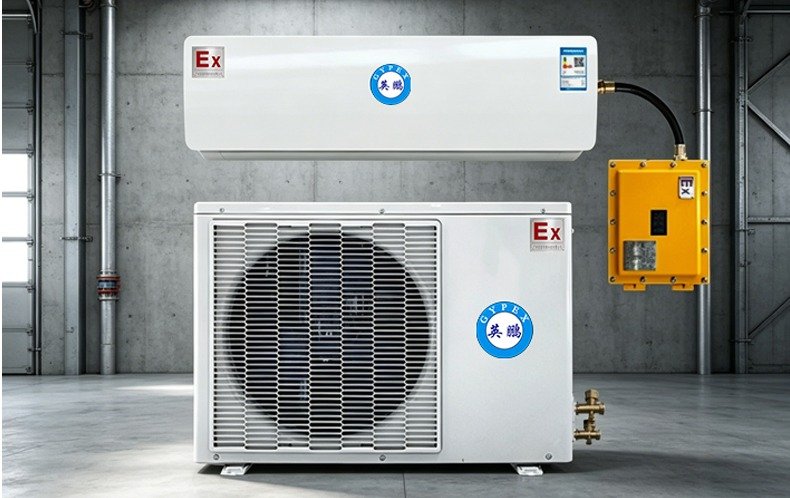
North American plants classify hazardous areas with the NEC. The Class I Division system is common across refineries, chemical plants and paint facilities. Many buyers struggle with Division 1 versus Division 2. In addition, they wonder which class i division 1 air conditioner they really need. This guide explains the NEC rules in plain language. Then we show how they affect equipment selection, certification and cost. In short, you will finish with a clear path to compliance.
What the NEC Class I Division System Means
The National Electrical Code organizes hazardous locations by class, division and group. Class I covers flammable gases and vapors. Division 1 means the hazard exists under normal operating conditions. Division 2 means the hazard appears only under abnormal conditions. For example, a tank farm pump area is often Division 1. Meanwhile, a well-ventilated storage room may be Division 2. The IEC zone system offers a parallel classification, and many global plants use it instead.
Groups define the gas type and energy level. Group A covers acetylene, Group B hydrogen, Group C ethylene and Group D propane-class gases. In addition, temperature classes (T1 to T6) define maximum surface temperatures. Consequently, equipment selection depends on three things: division, group and temperature class. Your area classification study determines all three values. Therefore, obtain that study before you shop for HVAC equipment.
Division 1 vs Division 2: The Practical Differences
Division 1 demands explosion-proof (flameproof) or intrinsically safe equipment. Division 2 allows less restrictive protection methods. Therefore, Division 1 equipment costs more and takes longer to deliver. The table below compares the key points for HVAC selection.
| Criterion | Class I Division 1 | Class I Division 2 |
|---|---|---|
| Hazard presence | During normal operation | Under abnormal conditions only |
| Typical protection | Explosion-proof (Ex d), intrinsically safe | Explosion-proof, non-incendive, purged |
| Wiring methods | Threaded conduit and sealed fittings | Less restrictive but still certified |
| Equipment cost | Higher | Moderate |
| Typical rooms | Pump rooms, process cells, open tanks | Storage rooms, analyzer shelters, ventilated halls |
In practice, the division changes the protection philosophy. A Division 1 room needs a unit that contains an internal ignition completely. A Division 2 room may accept equipment with a lower ignition risk. However, many owners standardize on the same certified hardware. That choice simplifies spare parts and operator training. In addition, it eases future reclassification.
How Division Rules Change Your Air Conditioner Choice
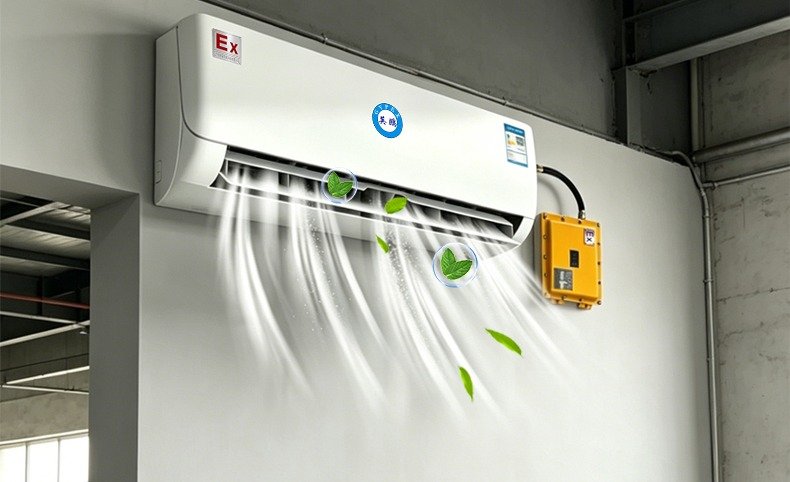
HVAC equipment must match the division of the room. In a Division 1 area, a class i division 1 air conditioner must place all ignition-capable parts inside certified enclosures. Consequently, the unit uses flameproof housings and certified control circuits. In Division 2, manufacturers may use non-incendive components. However, the safest practice is to choose fully certified hardware anyway. Therefore, compare certificates, not marketing claims.
Check the listing mark before purchase. North American projects usually require UL or cUL listing for hazardous locations. In addition, verify the group and temperature class on the nameplate. A unit rated for Group D, T3 may not suit a hydrogen area (Group B). Therefore, read the nameplate carefully. Similarly, confirm whether the certificate covers both divisions. Notably, some units carry dual listing for Division 1 and Division 2.
For typical control rooms and electrical rooms, our wall-mounted explosion-proof air conditioner covers most Class I Division 2 spaces. Larger process buildings often use a cabinet explosion-proof air conditioner. In addition, our buyer guide explains the full product range in detail.
What a Class I Division 1 Air Conditioner Must Include
A class i division 1 air conditioner needs more than a sturdy cabinet. First, all electrical components sit inside certified enclosures. The compressor, fan motors and controls use flameproof (Ex d) protection. In addition, the control circuit often uses intrinsically safe barriers. Consequently, an internal spark cannot reach the room atmosphere. Moreover, the unit carries a nameplate that lists the class, division, group and temperature class. Therefore, read this plate before installation.
Cooling capacity and ambient rating also matter. Many Division 1 rooms sit in hot process areas. Therefore, choose a unit rated for the maximum ambient temperature. In addition, check the air distribution pattern. A room with dense equipment needs good throw and circulation. Consequently, match the airflow design to the room geometry. In short, treat the unit as a safety device, not a convenience. In fact, choose a class i division 1 air conditioner with certified spares available for a decade. Moreover, confirm the unit supports the voltage and frequency on site. In addition, ask for the full certificate package before you place the order.
Installation and Service Considerations
Installation follows strict rules in Division 1 areas. Use threaded rigid conduit with sealing fittings. In addition, certified electricians must perform the wiring. Moreover, plan service access from outside the classified zone. Consequently, maintenance crews avoid entering the hazardous area. Furthermore, keep spare filters and fuses on site. In short, design the installation with service in mind.
Documentation plays a big role. Keep the certificate, manual and wiring diagram with the unit. In addition, record the installation date and service history. Consequently, audits become straightforward. Moreover, schedule annual inspections by a qualified party. Therefore, your Division 1 cooling stays compliant for years. In addition, ask the supplier for training. A trained crew solves small problems before they grow. Moreover, keep the spare parts list current. Certified parts change over time. Consequently, review the list every year.
NEC, ATEX and IECEx: Keeping Your Documents Straight
Many global projects mix NEC and IEC requirements. The ATEX Directive (2014/34/EU) governs European equipment. IECEx covers international certification. NEC and UL govern North America. Consequently, ask your supplier which certificates apply to your market. Then verify the markings on the actual nameplate. In addition, keep the certificates current. Recertification matters when the area classification changes.
Documentation protects you during audits. Store the certificate, the manual and the area classification study together. Moreover, note the installation date and the service history. Consequently, inspectors can verify compliance quickly. In short, treat the paperwork as part of the safety system.
Buyer Checklist for Class I Division HVAC
- Obtain the area classification study first.
- Confirm the division, gas group and temperature class.
- Ask for UL/cUL, ATEX or IECEx certificates as applicable.
- Match the nameplate marking to the room classification.
- Specify corrosion protection for coastal or chemical sites.
- Confirm voltage, frequency and high-ambient rating.
- Keep the certificate and manual in the equipment file.
FAQ
Can a Division 2 air conditioner be used in Division 1?
No. Division 1 is a more severe hazard. Consequently, you need equipment certified for Division 1. Using a Division 2 unit there violates the NEC.
Is Class I the same as Zone 1?
Not exactly. The systems overlap but differ. Class I Division 1 roughly corresponds to Zone 1 or Zone 0. In practice, many plants accept equivalent certification. However, confirm this with your authority having jurisdiction (AHJ).
Does a class i division 1 air conditioner cost more?
Usually yes. Explosion-proof enclosures and certified controls add cost. However, the price gap narrows with volume and standard designs. Therefore, compare lifetime value, not just the invoice.
Which class i division 1 air conditioner fits a small control room?
A wall-mounted certified unit often fits best. Therefore, send the room size and heat load. In short, we will size the unit for you.
What certificate does my project need?
It depends on location. U.S. projects usually require UL/cUL listing. European projects need ATEX. Export projects often accept IECEx. In short, ask your engineering consultant first.
Need a certified class i division 1 air conditioner for your plant? Contact LONTU with your division, group and temperature class. We will recommend the right certified unit and send a quotation. Email sales@blockchain-miner.com for a fast response.